


Before lights out
Your screen keeps the sun up.
Blue-rich evening light can suppress melatonin and push the body clock—and sleep—later.
Tell your body the sun has set.
Through deep amber, cold screen light becomes sunset-warm. The view changes; your evening doesn’t have to.
£29.99 — normally £34.99 · Free UK shipping · 30-day returns · 1-year warranty

Unfiltered screen light Through SleepSpec deep amber
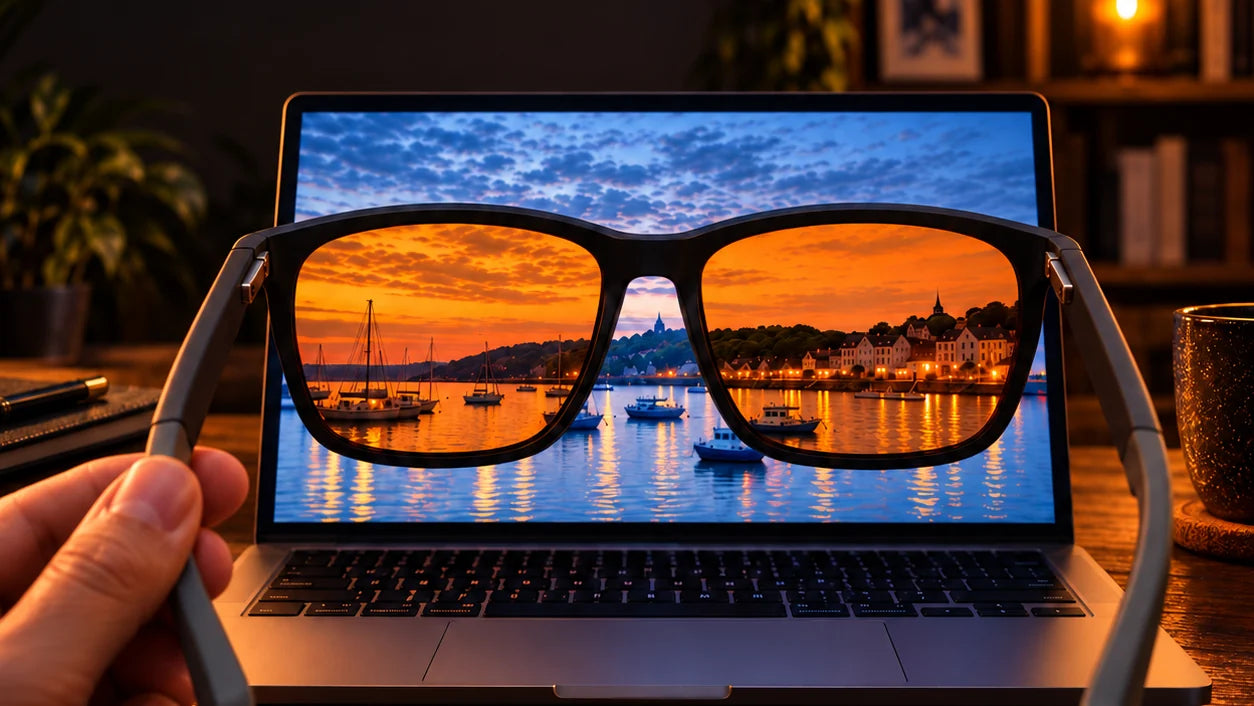
What you actually see
The blue goes. The detail stays.
The view is deliberately, strongly amber. That is the mechanism, not a side effect — what is removed is the slice of the spectrum your body reads as daylight.
Screens, text and entertainment stay usable, and SleepSpec preserves more natural colour than dark-red lenses.
98% ± 2% blue-green-light filtration across 400–520 nm.
How to Wear SleepSpec
Nothing to charge, nothing to install — the only thing that changes is the light reaching your eyes.
- 23 g · TR90 frame
- Blocks 98% ± 2% · 400–520 nm
- Case, cloth and guide included
-
011–2 hours before bed
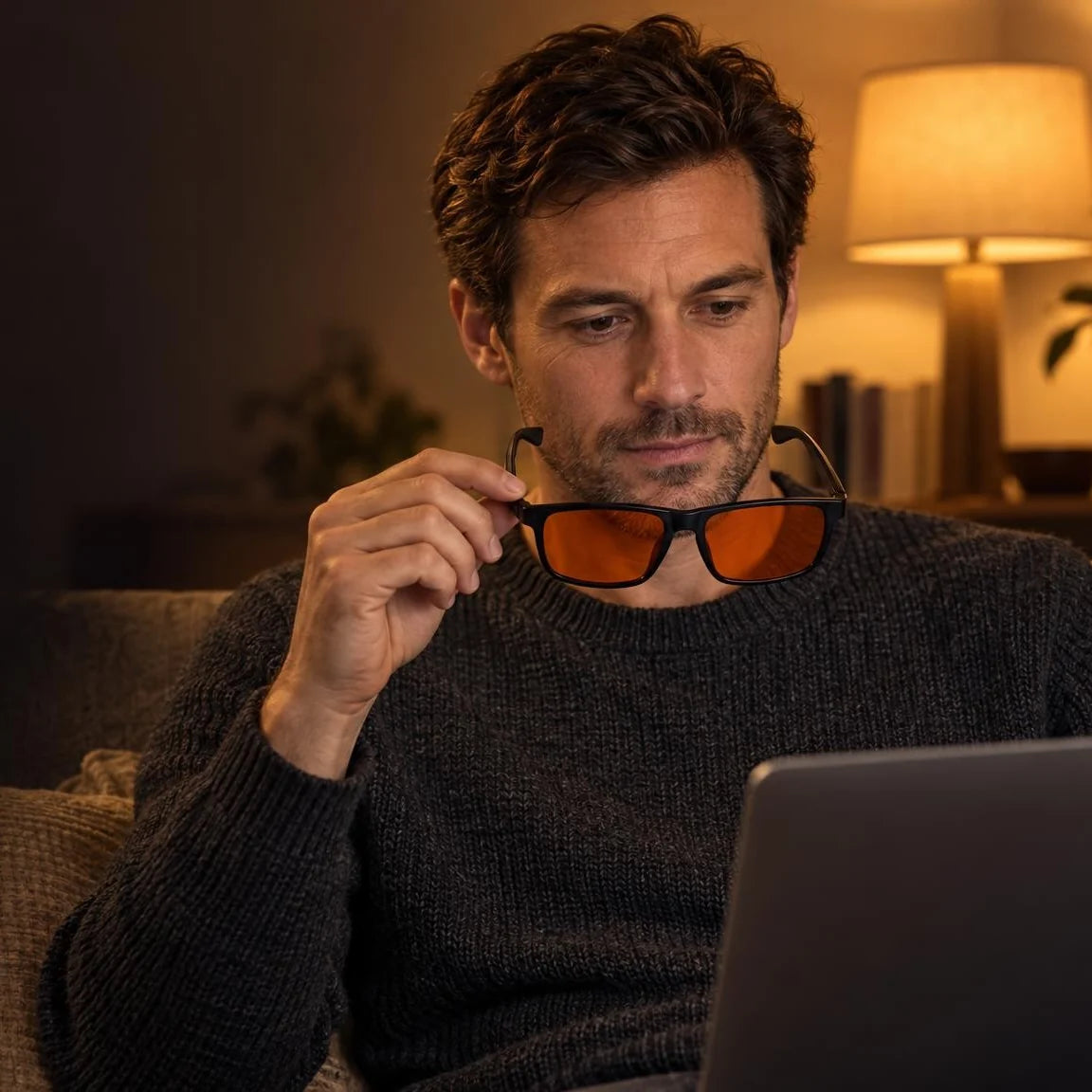
Put them on
Start of your wind-down — the evening window identified in sleep research. The earlier you put them on, the cleaner the signal to your brain.
Non-prescription · fits most face shapes
-
02Through your evening
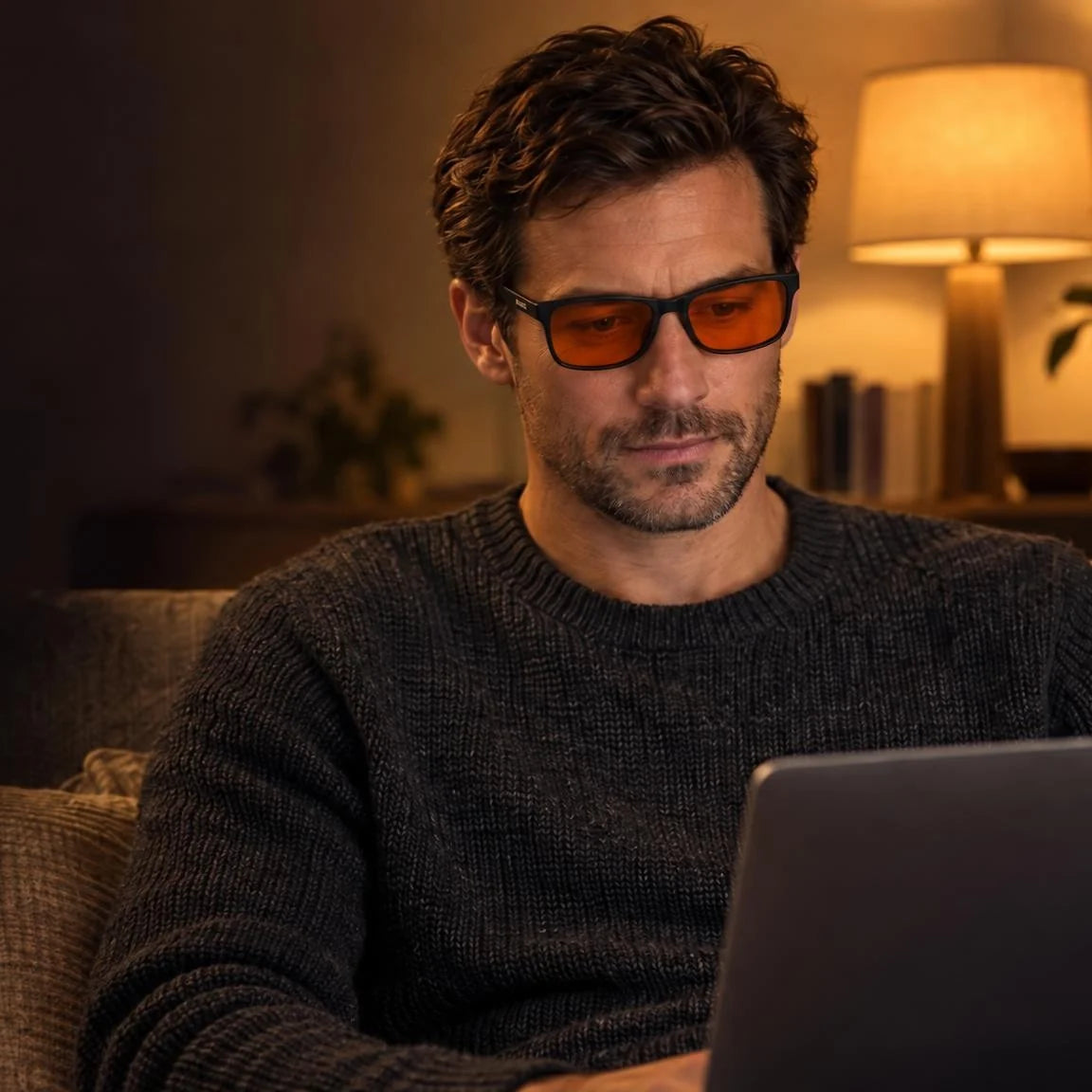
Use your screens
Watch TV, scroll, work, read. The blue goes, the detail stays — the lenses filter while you do what you'd do anyway.
Blocks 98% ± 2% across 400–520 nm
-
03At lights out

Take them off
Drop them in the case on your bedside table. Lights off, no wake-up signal, ready for sleep.
Hard case, cloth and guide included

£29.99 — normally £34.99 · Free UK shipping · 30-day returns · 1-year warranty
Most reviewers say they notice a difference within the first week of consistent use. Individual results vary. SleepSpec is not a medical device.
Why it works
Built around one narrow band of light.
What that band does, what independent research has measured, and why wearing them is the part that decides the outcome.
-
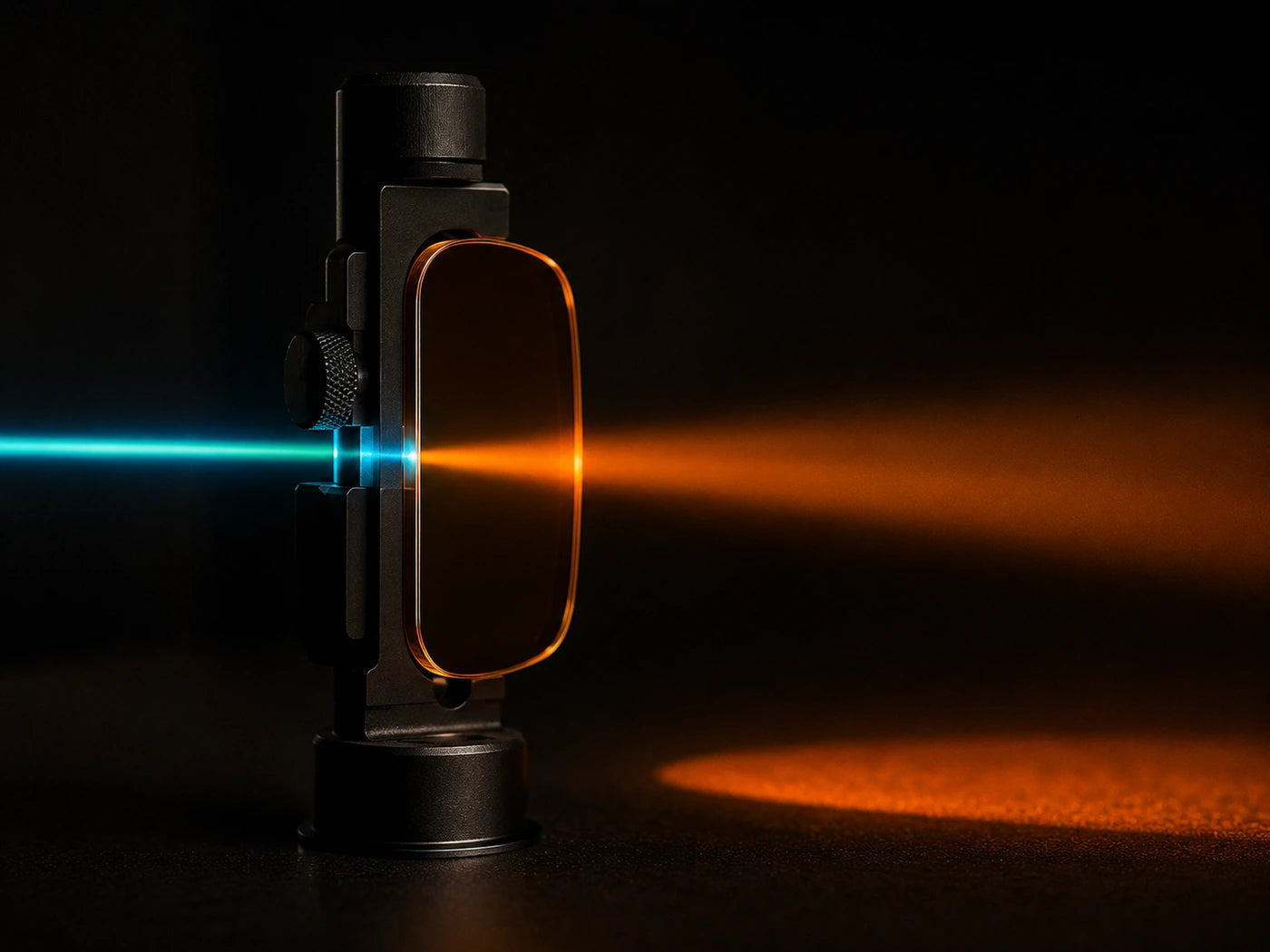
Fig. 01 Transmission, 400–520 nm Receptors in your retina driven by melanopsin are most sensitive to blue-green light, peaking near 480 nm. Reaching your eyes in the evening, it can suppress melatonin and push your sense of night later. SleepSpec filters 98% across 400–520 nm, verified batch by batch — warmer wavelengths still pass, so the evening stays visible.
The research
- Filtration measured by spectrophotometer, batch by batch. Circadian sensitivity: Schöllhorn et al., 2023.
-
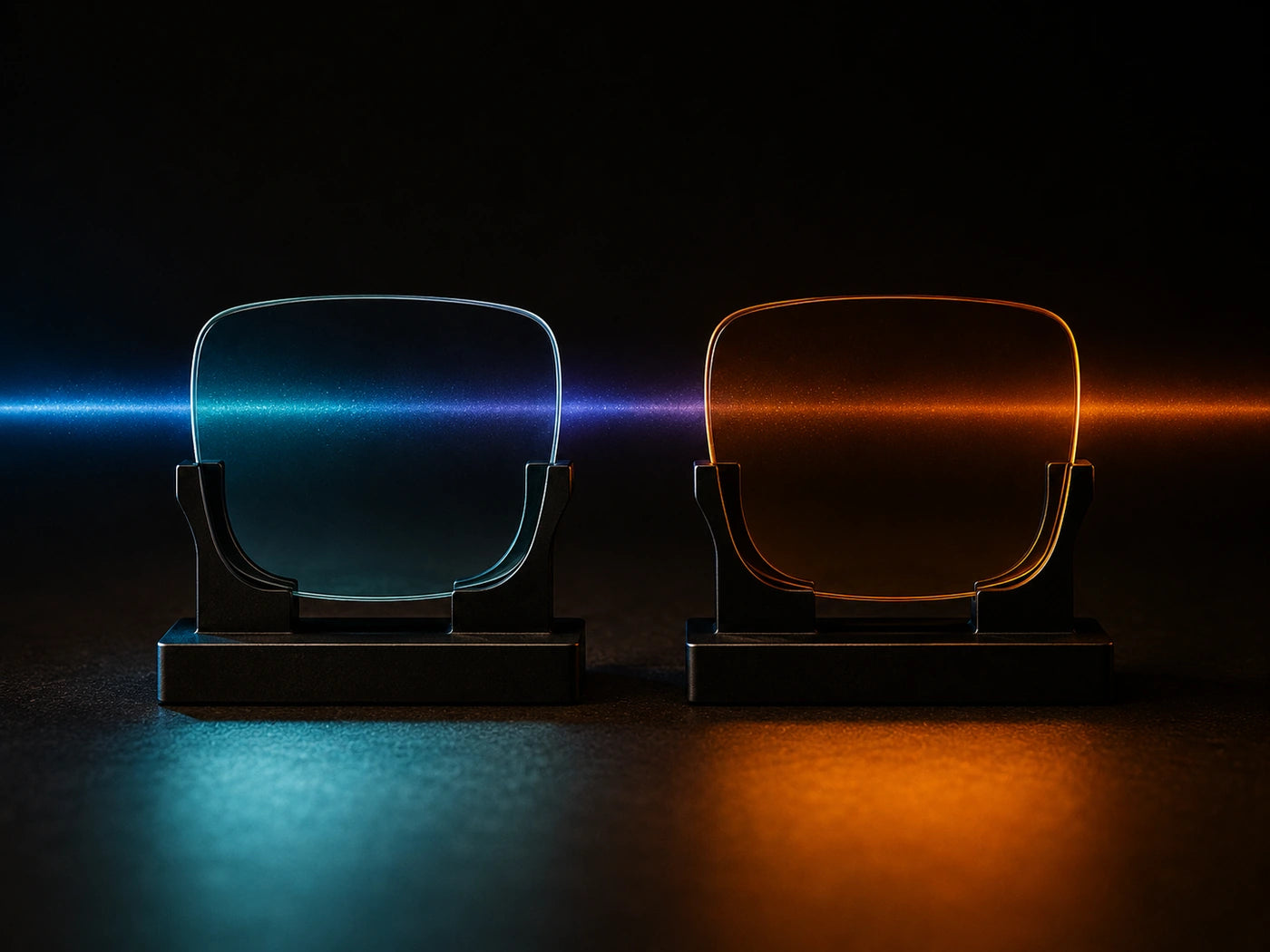
Fig. 02 Coverage compared Clear blue-light glasses are made for daytime glare. Most filter a fraction of blue light and taper off around 480 nm — the point where the circadian system is most sensitive. SleepSpec covers the full 400–520 nm band instead, built for the one to two hours before bed. Younger eyes filter less short-wavelength light naturally, so full coverage matters more.
The research
- Melanopsin sensitivity: Schöllhorn et al., 2023. Lens transmission changes with age: established ophthalmology.
-
Fig. 03 Independent findings In adults with insomnia symptoms, amber lenses worn two hours before bed were linked to about 52 minutes more self-reported sleep and 29 minutes more by actigraphy, versus clear lenses. Other trials reported roughly 58% higher night-time melatonin, and melatonin onset about 28 minutes earlier. SleepSpec was not part of these studies.
The research
- Shechter et al., 2018 (14 participants). Ostrin et al., 2017 (21). Liset et al., 2021 (60).
-
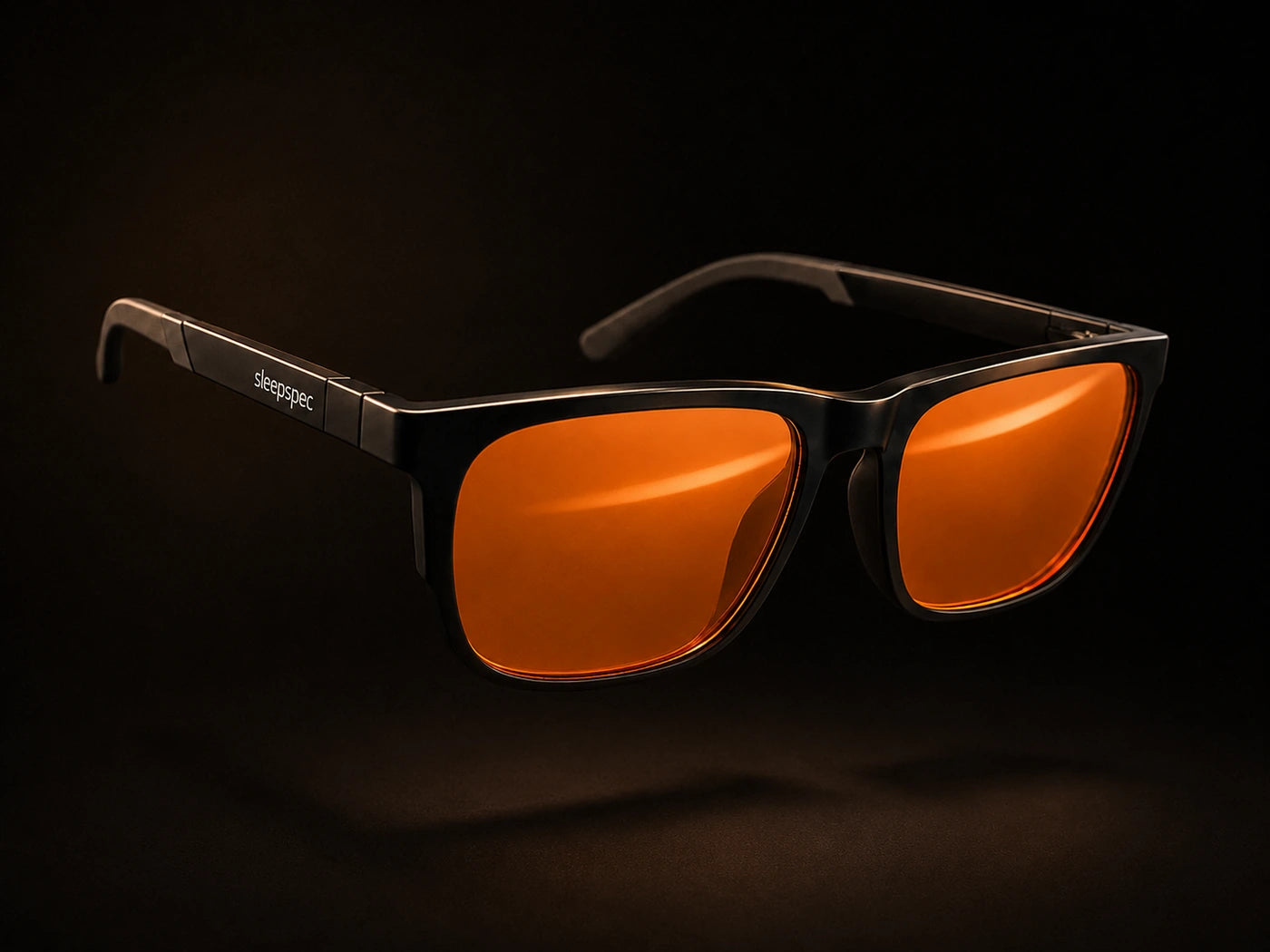
Fig. 04 Frame, 23 g In the studies, the effect came from consistent evening wear in the one to two hours before bed — which only works with glasses you don’t mind keeping on. SleepSpec frames weigh 23 g in flexible TR90, with spring-flex hinges. Wide-coverage lenses also cut the light leaking in from lamps and screens at the edges of your vision.
The research
- Wear protocol: Shechter et al., 2018. Weight, material and filtration are SleepSpec specifications.
-
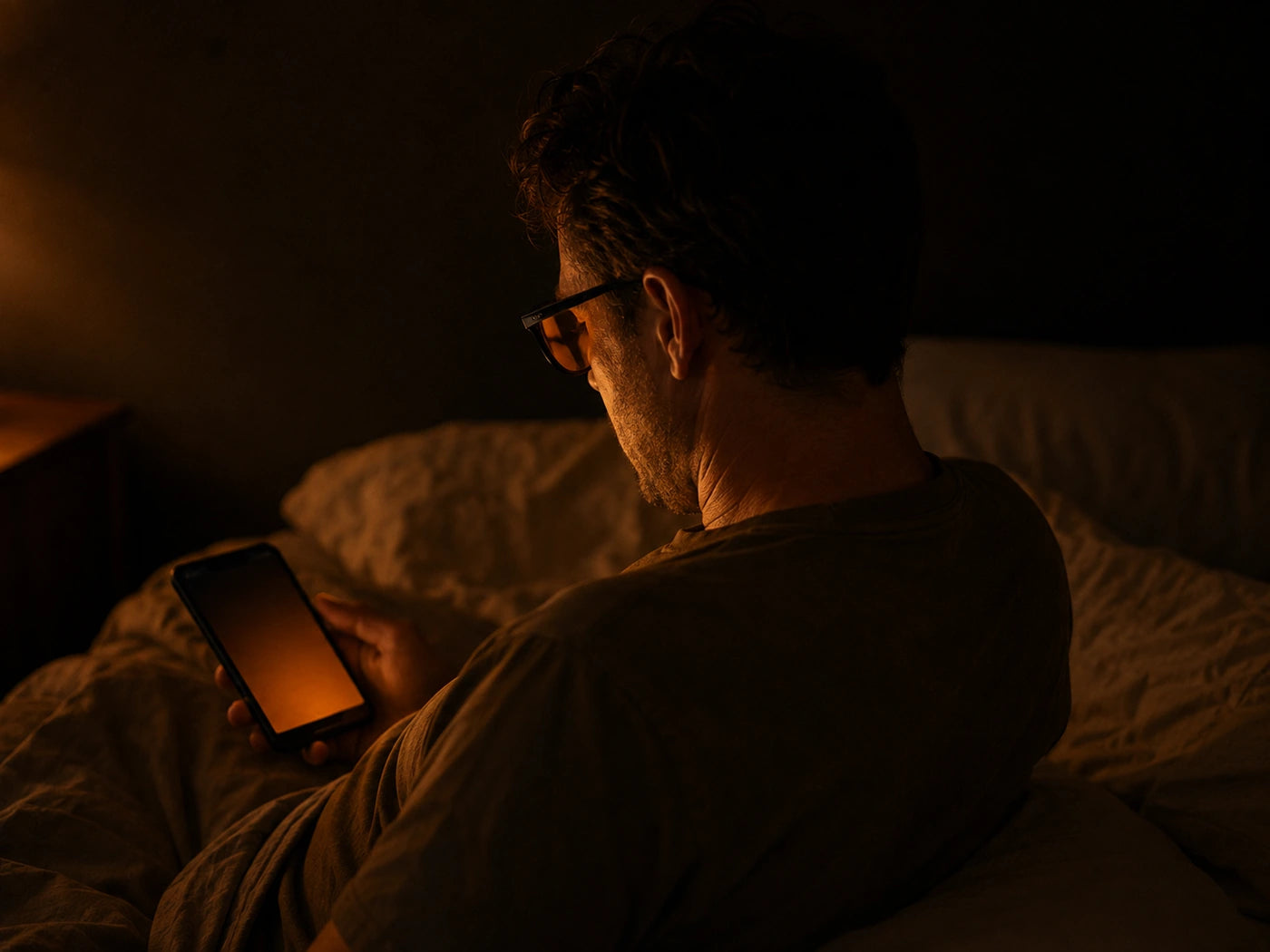
Fig. 05 The two hours before bed Evening screen light has been shown to delay circadian timing and reduce evening sleepiness. In two workplace studies, filtering it was linked to better sleep and stronger next-day work engagement, with self-described “night owls” benefiting most in one of the two. Worn one to two hours before bed, SleepSpec filters the alerting range while warmer light still passes.
The research
- Chang et al., 2015. Guarana et al., 2021 (63 managers, 67 call-centre employees).
The independent studies cited above tested evening light exposure and blue-light-filtering lenses in general. They did not test SleepSpec. Individual results vary, and SleepSpec is not a medical device.
Why 98%
Backed by the research — engineered beyond it.
Eight independent university studies have shown that filtering blue and blue-green light before bed supports earlier melatonin release, faster sleep, and deeper rest. The lenses tested in those trials blocked 40–80% of that light.
Filtration across 400–520 nm. The trial figures describe the lenses used in the published studies, not SleepSpec.
SleepSpec wasn't tested in these trials — it was engineered from them.
Houston · Columbia · Montana State · Bergen · Oklahoma · Indiana
Read the full research →
- Filtration
- 98% across 400–520 nm
- Frame
- 23 g TR90, spring-flex hinges
- Wear
- 1–2 hours before bed
£29.99£34.99
Non-prescription. One unisex fit.
Shop SleepSpec — £29.99Free UK shipping · 30-day returns · 1-year warranty

Why SleepSpec exists
It started with my own evenings.
The screen was still on, but the day needed to be over.
SleepSpec began with that problem. Angus set out to build sleep glasses for the last part of the evening: strong filtration, detail you can still read, and a frame light enough to keep on until lights-out.
Today SleepSpec is a United Kingdom sleep-tech brand for people whose evenings do not end when the sun goes down.